First Steps After Someone Dies

April 14, 2025

First Steps After Someone Dies

When a loved one passes away — no matter how expected their passing might be –the list of things that need to be done can be overwhelming.


The first thing that will need to be done is obtaining a legal pronouncement of death. This is done by a medical professional and will be done by staff if your loved one passes at a hospital or in hospice. If your loved one dies at home, then 911 should be called so that their body can be transferred to a hospital where the declaration will be made and they can then be transferred to a funeral home.


That is why it is important to share the load with friends and family. The only way to get through it all is to divide and conquer.


Then what?


Hopefully, your loved one did some planning prior to their passing. Ideally, they have prepaid for all funeral arrangements, or at least left a document explaining their wishes. If no plans or designation has been made, then someone will have to be the person to make all the decisions.


If a designation has not been made for who will take care of the funeral arrangements, the spouse, surviving partner, or closest surviving relative will be responsible for such decisions.  For those who don’t have immediate family to handle these arrangements, or have special requests that they want to make sure are fulfilled, anyone, regardless of relation, can be designated responsible for funeral arrangements in Rhode Island. An official funeral planning designation form can be found here. It should be printed, filled out and notarized, and shared with your healthcare proxy and funeral planning agent.

Tell Friends and Family

The next step is to let people know, whether that be through a group email or text chain, or going through your loved one’s contact list and contacting each person individually. If you have access to your loved one’s social media, writing something there can be a good way to ensure that you have not left anyone out.


Social media pages like Facebook allow you to memorialize a deceased person’s account so it will continue to exist as a page where friends and family can share memories.

Time for Funeral Arrangements

Within a few days of a loved one’s passing, it is now time to start making the funeral arrangements. It is highly advised that families plan out as much of their funeral arrangements as possible well before their time comes as this will help surviving loved ones in the long run. Click here for more information about planning ahead.


If your family has not planned their funeral or paid for it, this is when you will need someone to take charge of the arrangements and most likely pay out of pocket until the probate process has been finalized (read more about that here).


If the person was in the military at any point, work with your funeral director to contact the Veteran’s Administration to see if there are any benefits for which your loved one is eligible. The funeral home that you choose should be able to help you with this as well.


There will be many questions that will need answering for the funeral arrangements, so it is best to rely on other friends and family to help at this time. Who will write and read the eulogy? Cremation or burial? End-of-life celebration or traditional funeral? Who will write the obituary? Answering all of these by yourself will be overwhelming, so make sure at least one other person is helping you with all of this.

Copies of Death Certificate

Once a death certificate is recorded, you will need to get copies in order to shut down bank accounts, investments accounts and credit cards. The funeral home will notify the Social Security Administration, but you should also contact SSA to verify changes in benefits.


Even if your loved one has left behind a will and prepaid their funeral, it is advisable to get a CPA and estate attorney involved, especially if their assets value more than $50,000. Tax returns might need to be filed for that year and it is helpful to have an accountant working on this.


Keep track of all bills as the estate is being settled to ensure that they are paid. This helps in that when everything is finalized, the person who paid those bills is reimbursed.


For more information on what will need to be done in the days and weeks after a loved one’s death, here are some additional resources:

United Way: Immediate Steps to Take When a Loved on Dies

What To Do After Someone Dies

When a Death Occurs – Remembering A Life


Here at Memorial Funeral Home, we also provide aftercare resources for families. This support is provided by licensed counselors and our funeral directors who are educated in such programs. Please feel free to contact us if you have any questions.


By Kim Shute May 27, 2026
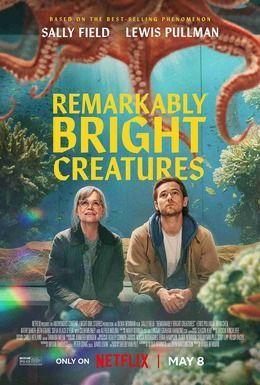
Before this review begins, a confession: when a book becomes a film and a reader walks out of the movie disappointed, whose problem is that? The filmmakers or the readers? I have been sitting with that question since the first Harry Potter movie came out.  This month I was eagerly awaiting the release of Remarkably Brights Creatures based on the Shelby Van Pelt book I adored. When Netflix announced the adaptation, I allowed myself to get excited. What arrived is a film that is not bad, exactly, but one that never settles into the unhurried, heartfelt book I remember. Tova is the stoic, lonely, and tormented protagonist who is plagued by an unresolved grief event 30 years earlier. Marcellus is her aging, intelligent, and determined giant Pacific octopus friend from the aquarium where she works. Unfortunately, the film doesn't trust the patience that the slow unfolding of the book required. It wants to get somewhere fast, and in doing so, it loses the slow build that gave the book a quiet, magical power. Computer-generated imagery is a real stumbling block for me. I want to trust what I see and that is becoming harder here in 2026. Marcellus’ digital rendering and other underwater scenes pulled me out of the moment as I was so aware that it was not “real”. I was so aware of the artificial nature that I couldn’t stay in the moment. A story that depends on a genuine emotional connection between a woman and a cephalopod cannot afford to look fake, unless it is claymation which this film is NOT. What the film does carry is grief and loss at its core. The grief has touched Tova through the loss of her husband and their son; it touches the aspiring musician, Cameron, through the recent loss of his biological mother, and Marcellus has loss in his captivity. Their bond is supposed to be the film's steadiest ground, and yet even here, something feels held at arm's length; the performances occasionally unable to close the distance. The ending wraps everything up so neatly that it undercuts the bittersweet sadness that made the book what it was. Life doesn't resolve like that. I found myself wondering whether, after a few years of things not resolving cleanly in the real world, we have started to ask our stories to do it for us. I understand that impulse, but I'm just not sure it serves this particular story. If you haven't read the novel, you may find more to enjoy here than I did. If you have, go in with tempered expectations and maybe give Marcellus the benefit of the doubt even when the screen doesn't quite do him justice.
By Kim Shute May 27, 2026
This month we are going to try something new because there are so many myths circulating out there. We are going to begin with the most famous one: the five stages of grief by psychiatrist Elisabeth Kubler Ross which came out in the late 1960s. This theory was developed after conducting qualitative research interviews of 200 terminally ill older adults. I want to point out, loud and clear, this study was completed with people approaching the end of life, not the people who lived through the death of a significant person in their lives. This model is well known to most people and for those who are not familiar with it, the stages are sequential emotions/reactions. The stages are denial, anger, bargaining, depression, and acceptance. Many people believe that this is like a checklist that follows a linear timeline. This means denial is the beginning of the process of grief and you are done once you complete all five. What we know now in 2026 is that is NOT how grief works. These five emotional reactions are just a few of the things a person can feel after a death of someone in their life. Not every feeling listed is felt by everyone and certainly not in a specific order. Since that study was released nearly 60 years ago, researchers and grief practitioners — the people who study loss and the people who show up trained to support the grieving — have raised serious questions about it. The main critiques? The stages aren't defined clearly enough to actually help anyone supporting a grieving person, and the study never accounted for how personality or culture shapes the way someone experiences loss. The research world has moved on and so has our understanding. In the decades since, far better models have emerged, ones that actually reflect how real people experience loss. That said we cannot dismiss her contribution entirely. Kubler Ross did something very few had done before, she put a national spotlight on grief. For that the field of grief owes her a debt of gratitude.  If you take nothing else away from this article, I hope you understand there is no right or wrong way to do grief and there is no timeline.
By Pearl Marvell May 27, 2026
Grief doesn't follow a schedule. It doesn't end after the first year, and it certainly doesn't come with instructions. On Thursday, June 18, from 12:30 to 2:30 PM, Middletown Public Library is hosting a free class designed to explore those quieter, often invisible dimensions of grief. The session, titled Grief in the Real World: People, Identity & the Long Haul, will take a candid and compassionate look at what grief really looks and feels like beyond the early stages. The session will be facilitated by Memorial Funeral Home's Director of Community Relations, Kim Shute. Topics will include how to respond when others say the wrong thing — something many grieving people encounter more than once — and how loss can quietly reshape your sense of who you are. It will also address why grief can feel different, or even more intense, as time passes, a phenomenon that often catches people off guard. The goal is to offer a supportive, approachable conversation with practical tools that attendees can carry into daily life. Sharing is entirely optional — there is no pressure to speak. The event is open to everyone, and no registration is required. Everyone is welcome. When Thursday, June 18 12:30 – 2:30 PM Where Middletown Public Library Free & open to all
By Pearl Marvell April 28, 2026
May 14: New & Innovative burial options  There's a reason most of us avoid talking about death. It feels morbid, premature, or simply something that we'd rather not think about. But a new lecture series at Island Cemetery in Newport is making a gentle, practical case that these conversations — held early, held openly — are among the most meaningful we can have. Death and Dying is an evening series of talks that brings together experts and community members inside the historic Belmont Chapel at Island Cemetery for evenings that are all about intention. Memorial Funeral Home's Kurt Edenbach will be leading a conversation on May 14th in which he will address a question more people are asking: are there alternatives to traditional burial and cremation? The answer, increasingly, is yes — and the options have grown significantly in recent years, shaped by environmental concerns, personal values, and new technology. From green burials and conservation cemeteries to aquamation, human composting, and other emerging methods, the landscape of end-of-life choices is expanding in ways many people haven't yet heard about. This lecture offers a grounded, accessible look at what's available, what's legal, and what might align with your own wishes — or those of someone you're helping plan for. To reserve your spot, click on the link here .
By Kim Shute April 28, 2026
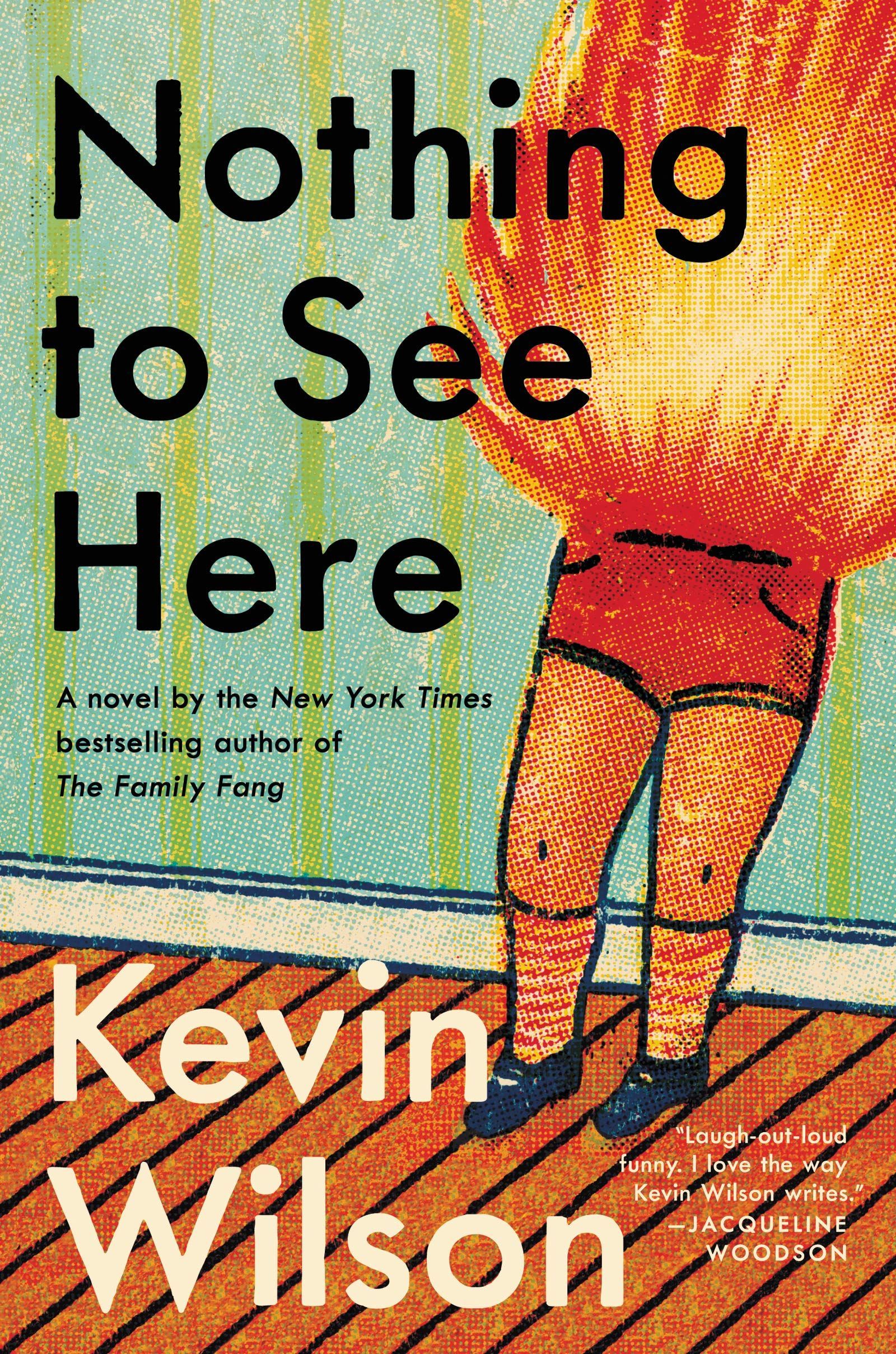
I just love it when I pick up a random book and it transports me to places, I never could have imagined. Nothing to See Here by Kevin Wilson is one of those rare finds. I was pulled in from page one by the story of a poor girl trying her luck as a scholarship recipient at a private boarding school for the ultra-elite, set against the backdrop of down-home Tennessee. The book vacillates between current day and flashbacks from her earlier life. Our narrator and main character, 28-year-old Lillian Breaker, is, quite honestly, a bit of a mess. She is living in the attic of her self-absorbed mother’s house, and her life feels stagnant at best. Beneath the humor, this is a story that touches on childhood neglect and the sharp divides of income and social status. We learn about Lillian’s complicated relationship with Madison, her former boarding school roommate who reappears with a mysterious and highly confidential job offer. What unfolds is a story about misfits that made me laugh out loud one moment and feel unexpectedly emotional the next. I struggled at times with the dynamic between Madison and Lillian. Given their history, I found myself questioning why they remained connected at all. Yet many of us are guilty of staying in relationships that do not reward us with reciprocity. Still, as the story unfolds, witnessing the trust develop under such unusual and often untenable circumstances helps to restore a bit of faith in human connection. There is a strange magic to this book. It leans into the weirdness in a way that is both disarming and oddly comforting. As Lillian herself suggests, I hope this story “hypnotizes you with weirdness” as you make your way through it. Let us know if you decide to give it a read or a listen, and what you think.
By Pearl Marvell March 27, 2026
It's likely that you've never heard of it before, but it is the process of naturally breaking down the body into soil.
By Kim Shute March 16, 2026
A case of mistaken identity turns into a sense of security for an octogenarian.
By Pearl Marvell March 3, 2026
Losing someone we love is one of life's most profound experiences, and finding a meaningful way to memorialize them can bring great comfort during the grieving process. While keeping a traditional urn at home is a time-honored choice, today there are more ways than ever to celebrate a life well lived. One of the most personal options is transforming ashes into wearable keepsakes. Some companies will pressurize ashes into a diamond, which you can then set into a ring, necklace, or other jewelry item of your choice. Our very own Director of Community Relations, Kim Shute, took some of the ashes of her late husband and made a diamond ring, which she absolutely loves. Parting Stone is another company that offers a beautiful way to memorialize your loved one by transforming their ashes into a collection of polished stones that can be held, shared, and cherished forever. The process uses scientific precision to solidify cremated remains into clean, ceramic-like stones that vary in size, shape, color, and texture — making each collection as unique as the individual it honors. Rather than an urn tucked away in a closet, families can carry the stones in their pocket, display them in a memorial garden, scatter them meaningfully, or divide them so that everyone who loved the person can keep a piece close — making Parting Stones a deeply personal and lasting way to stay connected to those we've lost. For those who feel a connection to nature, there are several meaningful earth-friendly options. Tree urns allow a loved one's ashes to nourish and give life to a tree, which provides a living, growing tribute that endures for generations. Another eco-conscious option is a coral reef memorial, where ashes are incorporated into a concrete reef structure that helps restore natural marine habitats. Scattering ashes in a meaningful location is another deeply personal choice. If your loved one had a passion for travel, you could take their ashes on a journey and scatter them in places that were meaningful to them — perhaps somewhere they always dreamed of visiting. Scattering at sea can also be a beautiful send-off, especially if they loved the beach or were a boating enthusiast. For the creatively inclined, ashes can be woven into works of art. You can commission an artist to create a painting using paint mixed with your loved one's ashes, with popular choices including a portrait of the deceased or a scene from their favorite landscape. Companies can also press ashes into a vinyl record , allowing you to preserve a loved one's favorite songs as a lasting musical tribute. As you can see, there are so many ways that we can honor our loved one’s ashes. If you have any questions, reach out to us!
By Kim Shute February 28, 2026
Asking for help with heavy snow today may be the very thing that keeps you independent longer tomorrow.
By Kim Shute February 24, 2026
A movie about figuring out who to spend eternity with.