Taking a look at funerals around the world

Gabriella Iannetta Calabrese • October 15, 2024

There’s no definitive answer on when, exactly, humans started to bury their own people–spouses, siblings, parents–because burial sites were hardly preserved.

 Some of the earliest examples of human burials are believed to have occurred between the Middle Paleolithic 300,000 years ago in what is now South Africa to Qafzeh Cave in what is now Israel 120,000 years ago. 


What we do know is that burials have evolved and families around the world started to honor the dead in their individual ways. What may seem shocking to some, is comfort for another. 


Ainu, Japan

The Ainu people, who were colonized by Japan in the 18th century, believe that a life force or ramat lives in everything–objects, plants, animals. While ramats would reincarnate life after life, human spirits remain the same after death. 


Because of these beliefs a dying Ainu person would be dressed in white while lying as close to the hearth of Kamuy Fuchi, a passageway for souls to cross to the afterlife. Family members will place meaningful objects around the ailing person as offers to influence their property in death. 


The funeral is a joyous celebration where people chant and tell stories. Family members will begin ripping, denting, snapping objects in order to release the ramat for the deceased, before carrying the body to an isolated burial site. 


Ghana

A tourist might see a billboard for a funeral while walking the streets of Ghana. 


Ghanaian funerals are known for vibrant commemorations among dozens, if not hundreds, of people gathering to send off the newly departed. The occasion, that is hardly ever somber, could last for days and cost up to $20,000. 


The bereaved family hosts mourners who arrive in black and red traditional funeral clothing to eat, drink and dance. Like birthdays or weddings, funerals are known to be a social event to gather and celebrate. “Funeral tourism” has been a budding industry in Ghana for years. 


Even the caskets share a bit of cheekiness as a symbol for the person’s life before dying. Someone who owns a Mercedes Benz may want a coffin shaped like the popular German-made vehicle. A local singer might be buried in a human-sized microphone. Or for those looking for a bit more spice, one could be buried in a red chili pepper. 


Guizhou, China

Contemporary Chinese funerals have an emphasis on feng shui, offerings for the departed soul, eulogies and a funeral procession. Every April, Chinese families celebrate their passed loved ones at the Qingming Festival. 


But traditions dating back in the Guizhou province in southwestern China pique more interest. Explorers have looked up and awed at the hanging coffins dotting the valleys of the Yangtze River for decades. 


There’s no obvious reason why the coffins were hung dozens of meters high. The oldest are said to date back almost 3,000 years and experts are still stumped on how ancient people managed to transport the coffin, body and funeral objects to the cliff caves. 


Haiti

Haitian funerals can often have a mix of Christian and Voodoo death rites like having both a priest and a croque-mort advising the bereaved family. A croque-mort, French for “dead-biter,” is a Voodoo undertaker who will provide the family with a list of items needed in the coffin to ensure a safe pathway to the afterworld.


Voodoo practitioners, nearly half of the Haitian population, believe the soul lingers for about a week after the biological death. A Voodoo priest or priestess, known as a Houngan or Mambo respectively, releases the soul into dark water for a year and a half, before another ritual called the “Rite of Reclamation.”


On this day the soul transferred into a clay jar called a govi to be broken in a ritualistic way, sending the soul into the afterworld with other ancestral spirits. It is believed the soul makes its way back to a family or friend. 


India

The third most-practiced religion in the world, Hindiusim, believes that not only are spirits reincarnated back to the physical earth, but that eventually the soul will become one with Brahman, meaning the eternal and supreme “divine consciousness.”


While customs vary across the second-largest country in Asia, many practice similar Hindu funeral rituals known as antyesti. Cremation, or mukhagni, allows the physical body to return to one its original elements: earth, air, water, fire and space. Therefore Indian mourners believe cremating within 24 hours of death enables the soul to be released quickly to its next journey. 


Before cremation, family or friends will prepare the body with essential oils to the head and a combination of yogurt, milk, ghee and honey everywhere else. The body is dressed with a white sheet over their hands tied in a prayer position and their big toes bound together. Burials are also an option for Indian families and often follow a similar process.


Flowers and rice balls are left near the open casket or urn for 12 days, as friends and family come to visit, pray and chant with the newly departed. 


Indonesia

Troajan death rituals in Indonesia do not represent saying goodbye, but rather a continuation of the departed protecting their families. 


Families will hold on to the body of the recently passed and preserve it in their homes for up to years as they save money for an extravagant death ceremony. The spirit will roam earth until the ceremony that will set them off to Puya, the land of the spirits. More elaborate funerals could last for almost two weeks and sacrifice dozens of Buffalo and pigs. 


Every couple of years the bodies are exhumed by family and cleaned before donning a new outfit. This part of the ritual shows a sign of respect for the deceased as their spirit continues to protect the family. 


Madagascar

In the central hills of Madagascar tribes gather to exhume their ancestors from the crypts and dress them in new silks and lightweight fabrics. 


The ritual known as famadihana or “turning of the bones” is performed every five to seven years in order to silence the spirits who appear in a senior descendant’s dreams–complaining they are cold and need new clothes. This region in Madagascar believes that ancestors are the hinge between humans and God. 


The families in Merina and northern Betsileo do not believe in heaven or hell, but rather the soul is reincarnated into a life that is similar to the living. The spirit is not released to the next life until their bones have completely decomposed.


When someone dies in one of these tribes they are wrapped in silks and put in a temporary tomb with gifts, food and alcohol before sunset in order to avoid the negative powers of nightfall. The first time the bones are removed from the tomb years later they are brought out feet first, but after they are rewrapped, they are led back into the crypto head first to symbolize a new life. 


Mexico

Mexico’s Dia de Muertos may be one of the most familiar funeral rituals globally, often shown in movies for its visuals of bright yellow flowers, altars dotted with candles and candy skulls among a crowd dancing to uptempo music. 

The Day of the Dead is believed to be a Mexican tradition dating back before the settlement of Spanish colonizers in the 16th century. The ritual was likely influenced by the Aztec people of Mexico and is celebrated on All Souls’ Day attributable to the mixing of Spanish Catholic beliefs with Indigenous ones. 


Families in Mexico and parts of the United States, Philippines and Brazil gather on Nov. 2 to place photos, food, drinks and small gifts on home altars to celebrate their ancestors. Because of the growing popularity of the ritual in films, Mexico City now has an elaborate Dia de Muertos parade donning large floats and dancers with bright costumes. 


Sagada, Philippines

When a member of a Igorot family dies they are laid in a coffin often carved by themselves. If they are too weak to carve out a log, their family member will help prepare the casket made of timber and paint it.


Before the deceased is laid in the coffin it is tied to a chair and smoked to delay rotting as loved ones come to visit the corpse. The body was wrapped in rattan leaves and eventually moved to a coffin, then carried by the family to the rocky cliffs of Sagada’s Echo Valley. 


While hanging coffins is an ancient ritual going back more than 2,000 years in parts of China and Indonesia, the Filipino village is unique in that it still practices the tradition today. 


Sicily, Italy


Sicilians follow Roman Catholic rituals when it comes to burying their dead, but each part of Italy commemorates differently. 


When someone in a Sicilian village dies the funeral rites are expected within the next two days most. A room is prepared in the home to place the corpse for visitation, sometimes on a kitchen table if there is no other place for people to come and kiss the body. Doors are left ajar so the soul does not remain trapped. 


During the burial, the body is put in a coffin and is traditionally carried to the town’s church as a procession follows. At the church a Catholic mass is performed and at the burial site the family is met with condolences from visitors. 


A mass is held to commemorate the deceased one month and one year after their death. 


Sweden

Decades before a Swede may die naturally they are already preparing for their death. 


The practice dostadning tackles the fact that when humans die they leave behind a lot of material stuff. Death cleaning is started in a person’s 50s and begins to declutter items that are unessential in order to minimize their life before death. 


The Swedes are known for being private people, so it’s not surprising that their ceremonies are small gatherings. Traditionally family members wore a white tie around their arms to signify their proximity to the dead and their grief. 

By Kim Shute December 2, 2025
Have you ever seen a film that stays with you for days and changes the way you approach and look at your own life? You can see the trailer and the film is currently available on Apple TV. This film follows two exceptional poets, Andrea Gibson and Meg Falley on their remarkable journey through love and loss. The cinematography, the words, and the meaning added together provide the audience with a gift. I have not often been a fan of poetry, but Maya Angelou, Amanda Gorman, E.E.cummings, and now Andrea Gibson and Meg Falley have made me reconsider this position. Andrea Gibson was diagnosed with ovarian cancer in August of 2021, and this is their tale that begins with that news. The couple pull together and keep trying to stay alive through news both pleasant and unpleasant. Their love and dedication are breathtakingly showcased. This film is raw, authentic, uplifting, and deeply sad. It has won 5 awards so far including Festival Favorite at Sundance Film Festival in 2025. Gibson had rock star-like fame before their diagnosis as a spoken word poet. Their early career focused on social justice, gender norms, LGBTQ topics, and politics. After their diagnosis, the topics shifted to depression, mortality, life, illness, and love. This poet expresses feelings, sensations, and ideas that must be witnessed as they capture truths that touch all of our hearts at one time or another. 
Having The Talk of a Lifetime
November 19, 2025
When was the last time you sat down with a loved one and asked them questions about their life? Not just the day-to-day conversational questions, but the ones about the big and small moments? For many of us, we probably haven’t had these conversations. Unfortunately, many of us put these conversations off, thinking that we … Having The Talk of a Lifetime Read More » The post Having The Talk of a Lifetime appeared first on Newport RI | Memorial Funeral Home.
By Pearl Marvell October 31, 2025
If you have been discussing movies and documentaries with your family and friends, you might have come across the HBO series, The Mortician, a three-part documentary about a funeral business in Pasadena, California back in the 1980s. We figured it was important to talk about it since you might have some questions about the funeral industry after watching it! The series primarily focuses on David Sconce, a funeral director at the Lamb Funeral Home, a family-run business that was established in the 1920s. The show draws on both horror and intrigue from how a family-run institution loved by the community betrayed the trust of hundreds of families. The Mortician lays out how Sconce turned the funeral home into a money-making machine by systematically violating ethical and legal boundaries: mass cremations, body mutilations, stealing materials of value like dental gold, returning misidentified ashes, and engaging in intimidation and even alleged murder. The series is especially chilling because of its access to Sconce himself—this is the first televised interview since his more recent release from prison (there have been many prison stays). His justifications, denials, and evasions reveal an unrepentant mentality that challenges what viewers might expect from someone caught at the center of such horror. This well-researched series is a must-watch if you are into horror and have a strong stomach! What The Mortician does especially well is bring death care into the spotlight and what it means to care for loved ones who have passed. For us at Memorial Funeral Home, it certainly is a reminder that it is understandable that some people might have some distrust in funeral homes! What we can do is assure you that we are held to the highest standard of ethical integrity, both by ourselves, the state and federally. If you do decide to watch this series, know that none of this would ever happen at Memorial Funeral Home! And please feel free to reach out if you have any questions.
By Pearl Marvell October 30, 2025
Julia co-founded End of Life Rhode Island , an organization with a mission to educate the public about the role of the end-of-life doula.
By Kim Shute September 24, 2025
Life is too short, and it is especially too short for bad books, have I said that before? In this section we try to help you find books, movies, shows, and podcasts worth your time. This month you will need a box of tissues to read Marianne Cronin’s debut novel from 2021, but not for every page. Don’t worry, there are plenty of laughs within her novel too. This is a story of intergenerational friendship as well as life, loss, and resilience.  Lenni Pettersson, a Swedish born 17-year-old is in the terminal ward of the Glasgow Princess Royal Hospital in Scotland. She is a bit of rebel and bored with her time there, she is often looking for ways to fill her days where she never gets out of her pajamas. The ways she relieves herself of boredom include going to the hospital’s chapel to ask questions. Lenni’s knowledge base about Christianity is mixed up between fairy tales and the bible. She is polite, playful, and direct. The priest, Father Arthur, takes a shine to Lenni. One exciting addition to her days is the newly opened art therapy space lovingly called The Rose Room. It is there she meets Margot Macrae, an 83-year-old, who has a bit of spunk. Lenni realizes that between the two of them they have lived 100 years. They decide to make a painting (mostly by Margot, a gifted painter) and story (mostly by Lenni who has a way with words) for every year of each of their lives. In between we get to hear the flashbacks of their individual histories. It is heartwarming and at times, heart wrenching. This book is loaded with storytelling that illustrates love, confusion, life, sadness, joy, and of course death. We hope you will consider this month’s recommendation. Let us know if you like it.
By Kim Shute September 5, 2025
Buckle up people this show is not for the faint of heart, as many TV shows challenge us these days, long gone are the days of Richie Cunningham and Happy Days. Once again, the content for this show is for mature audiences, I mean sex is in the title. Sex and death are not topics that typically go together, at least not out in public. This month we are covering a new show on Hulu and Disney + called Dying for Sex.  The story is loosely based on a true story. Molly, the main character (played by Michelle Williams) is in her 30’s and has terminal metastatic breast cancer. It is not hard to imagine when given such a grave diagnosis that a person might look for ways to escape reality or make the best of the days one has left. Molly does that in an unexpected way; she sets her sights on-- you guessed it-- sex and she dabbles in Fifty Shades of Gray territory. Molly has had an unhappy marriage and one that is sexually unfulfilling. What would you do in her shoes? She decides to leave her husband because he is unable to fulfill her sexual desires. He feels sad when he sees her breasts, as all he can see is her diagnosis and grim prognosis. We then watch Molly try to figure out how to meet her needs both alone and with others throughout the comedy drama miniseries. Molly’s relationship with her best friend, Nikki (played by Jenny Slate) is rich with humanity and humor. So much humor! The chemistry between these two actors is a treat to witness. They show us the messy side of being human and the beauty of how we come together to support one another in times of dire need. I find myself thinking about the subject matter of this show weeks after I have watched an episode. This story gives viewers the opportunity to walk in someone else’s shoes, no matter how uncomfortable. I wonder how people with a terminal cancer diagnosis or someone close to them experience this show? Is it a relief to see part of your journey on a TV show millions of others are watching or is it too soon? If you have thoughts about this, please send us an email at kim@memorialfuneralhome.com.
By Pearl Marvell August 29, 2025
We are proud to introduce one of the newest members of our Memorial team, funeral apprentice Norma Figueroa! Norma brings with her not only over 17 years of experience in the medical field but also a warm spirit, a deep sense of compassion, and a genuine desire to serve families during some of life’s most tender moments. Norma is originally from Ponce, Puerto Rico and raised in Pawtucket, Rhode Island. Today, she lives in Central Falls. Her interest in the human body started early—when she was in high school and tasked with dissecting a cat during an anatomy class. That moment sparked a lifelong curiosity about anatomy and eventually led her to nursing school. She went on to work as a certified nursing assistant, central supply director, scheduler, receptionist, and lead CNA trainer. Reflecting on her years in health care, Norma says she has always been fascinated by “the amazing things a human body can do.” Her medical background, combined with training and certification in thanatology, gerontology, and funeral service preparation, makes her uniquely prepared for the next chapter of her career in funeral service. Though her background isn’t in funeral homes, Norma has found the transition both meaningful and inspiring. “I’m learning a lot,” she says. “Everyone here is eager to help me learn the ropes.” She has been shadowing at services and learning the administrative ropes that entail with this industry. Norma also knows firsthand how important it is to be sensitive to different family dynamics, a skill she developed through years of patient care. As a bilingual speaker of English and Spanish, she is especially passionate about helping families feel heard, understood, and comforted. “Being Hispanic, we turn everything into a party,” she jokes, “but I know that is not the case for everyone.” She brings that cultural awareness and perspective into her work, meeting families where they are and supporting them in ways that feel authentic to their traditions. Of course, not everyone understands her career choice. “Some of my friends have been weirded out about me working with the dead,” she admits. “And I’m like, ‘Well, you’re gonna need me someday!’” Norma is a proud mom of two college-aged children and she enjoys traveling, going to concerts, spending time outdoors with her kids, and doting on the family cat, Midnight. She also likes to eat tasty food and dance! We are thrilled to have Norma on our team. With her dedication, warmth, and professional experience, she embodies the heart of our mission: to provide care, comfort, and guidance when families need it most.
By Pearl Marvell August 13, 2025
In the wake of the COVID-19 pandemic, the demand for pediatric mental and behavioral health services has surged to crisis levels nationwide—and Rhode Island is no exception. For adolescents in Newport County, the situation has been especially dire, with no local acute care option for severe mental or behavioral health challenges. Until now, all of the state’s behavioral health beds have been concentrated in the Providence area—at Bradley, Hasbro Children’s, and Butler hospitals—forcing families in Newport County to seek urgent help off Aquidneck Island. Due to the lack of resources on the island, many families have relied on Newport Hospital’s emergency department. In 2022 alone, adolescents in crisis were boarded in the ED for 290 of 365 days, often waiting an average of 14 to 18 days for inpatient placement. These youth are among the most vulnerable, struggling with self-harm, aggression, or suicidal thoughts and behaviors. Recognizing this urgent gap, Newport Hospital is moving forward with plans for a dedicated Adolescent Behavioral Health Unit. The facility will be located on the hospital’s Sheffield 2nd floor and features six rooms and eight beds, including private and semi-private options. The space will undergo a complete interior renovation with substantial infrastructure replacements, advanced safety measures, and a secure outdoor garden for patient use. “It’s been almost a year in planning,” said Erin O’Dollard, Senior Philanthropy Officer at the Newport Hospital Foundation. “We’ve pushed the opening to January 2026 due to staffing challenges,” but, she said, they are well on their way to meeting the deadline in the New Year. O’Dollard explained that treatment for children is different than for adults, and the hospital has been seeing 30 or more kids a day at times, which makes this support so necessary. The unit will offer care ranging from single-day treatment to long-term hospitalization. Upon discharge, ongoing dialogue with families will ensure continued support for individuals and their loved ones. Newport Hospital is also working to secure funding for partial hospitalization programs in partnership with local schools and social workers. The need is undeniable. Nationally, suicide became the second-leading cause of death for youth ages 10 to 24 by 2018. Rhode Island mirrors the trend: one in five children ages 6 to 17 has a diagnosable mental health disorder, and the Rhode Island Youth Behavioral Health Survey found persistent feelings of sadness or hopelessness in high school students rose from 25% in 2009 to 37.8% in 2021. Calls to Kids’ Link RI , the state’s behavioral health crisis hotline, doubled between 2019 and 2021. The project is made possible thanks to community philanthropy. Dr. Jim Nolan and his wife, Peggy, provided the lead gift, inspired by a deep commitment to adolescent mental health. Funeral Director and Owner of Memorial Funeral Home Kurt Edenbach, also contributed to the construction and development of the ward. “It is important to have such a vital resource in our community, especially in the wake of the COVID-19 pandemic,” Edenbach said. “We’re proud to be part of the creation of this resource.” With this new unit, Newport County’s youth will soon have local access to the specialized care they urgently need—offering hope, safety, and healing close to home.
By Pearl Marvell July 22, 2025
Here at Memorial Funeral Home, we understand that the needs of our families have and will continue to evolve over time, and we try our best to evolve with those needs. One thing that has started to come up in conversations about pre-planning and other funeral arrangements is “What green options do you have?” As awareness of climate change and environmental impact grows, more people are seeking ways to align their values with how they live—and how they leave this world. Traditional burial and cremation methods can have significant ecological footprints, so natural burials and biodegradable urns are just some of the eco-conscious options that are reshaping how we approach death with care not only for loved ones but also for the Earth. We decided to break down some of the more eco-conscious options that we have at Memorial Funeral Home: Green burials In green burials, the body is buried in a way that allows it to decompose naturally without the use of embalming chemicals or other products that can harm the environment. Typically, the body is placed in a biodegradable casket or shroud and buried in a designated green burial cemetery. Currently, there are two cemeteries in Rhode Island that permit green burials. The Ellipse at Swan Point Cemetery and Prudence Memorial Park on Prudence Island also offer burial plots. To make the entire experience more eco-friendly, we offer electric vehicle transport services in a vehicle powered by solar panels on the roof of Memorial Funeral Home. These practices not only reduce pollution and carbon emissions but also help preserve natural habitats by supporting conservation and woodland preserves. Biodegradable urns Cremations can be more eco-friendly in that they are more space-efficient and do not necessarily require the use of formaldehyde to preserve the body, however, they do release carbon dioxide into the atmosphere. To counteract some of the negative effects of cremations, one can choose biodegradable urns that grow into trees, allowing a loved one’s remains to become part of a living legacy. Families can also choose digital memorials instead of traditional gravestones, reducing the demand for quarried stone and physical markers. Green burials, for example, allow the body to return naturally to the earth without embalming or synthetic materials. The body is typically placed in a biodegradable shroud or casket, and interred in a natural setting without a concrete vault. These practices not only reduce pollution and carbon emissions, but they also help preserve natural habitats by supporting conservation cemeteries or woodland preserves. Aquamation, or water cremation (alkaline hydrolysis), is another eco-friendly alternative. It uses water and a gentle alkali solution to break down the body, resulting in significantly lower greenhouse gas emissions compared to flame cremation. The bone fragments that remain are returned to loved ones in the same way that ashes created from flame cremation are returned. Other innovations include biodegradable urns that grow into trees, allowing a loved one’s remains to become part of a living legacy. How does aquamation work exactly? Aquamation, is currently legal in 28 states and will potentially be another option that we can provide in-state soon. The body is put into a stainless-steel chamber where an alkaline solution of water is mixed with potassium hydroxide. The chamber is then sealed, and both heat and pressure are applied. This breaks down the body’s tissues until only the bones remain, which are subsequently broken down and returned to loved ones just as they are in a traditional cremation. The whole process takes between 4 and 16 hours, depending on temperature and pressure. Aquamation uses approximately 90% less energy than conventional flame cremation—a process that emits the amount of carbon equivalent to a 500-mile car ride. Currently, water cremation is not offered in Rhode Island, but we work with another funeral home in Connecticut that offers the service. To make the process as green as possible, we offer EV transportation for this service as well. Choosing an eco-friendly funeral or memorial service is a meaningful way to reflect the values of a person who cared about sustainability in life. These choices help reduce the burden on our planet and offer a gentler, more natural process of returning to the Earth. As we continue to rethink how we care for the environment, it's only natural to consider how our final choices can leave a legacy of respect—for both people and the planet. Eco-friendly end-of-life services are more than a trend; they’re part of a movement toward a more thoughtful and responsible future.
By Kim Shute July 15, 2025
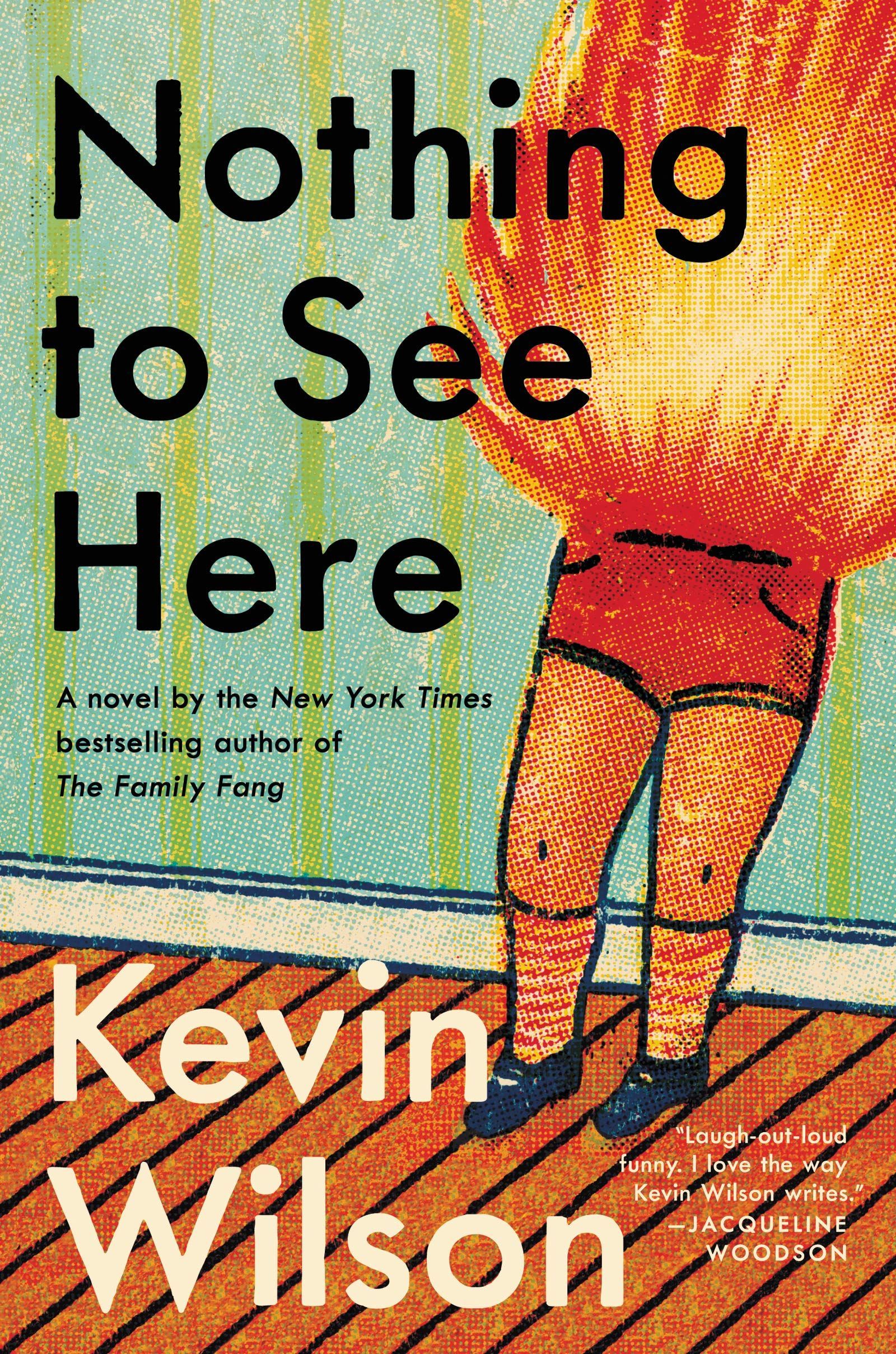
Director of Community Relations Kim Shute shares with us her thoughts on the most recent book that she has read.